Betty Smith Jeans Tokyo: Our Honest Review of the Custom Denim Workshop
An in-depth review and update after 2 years of wearing Betty Smith jeans!
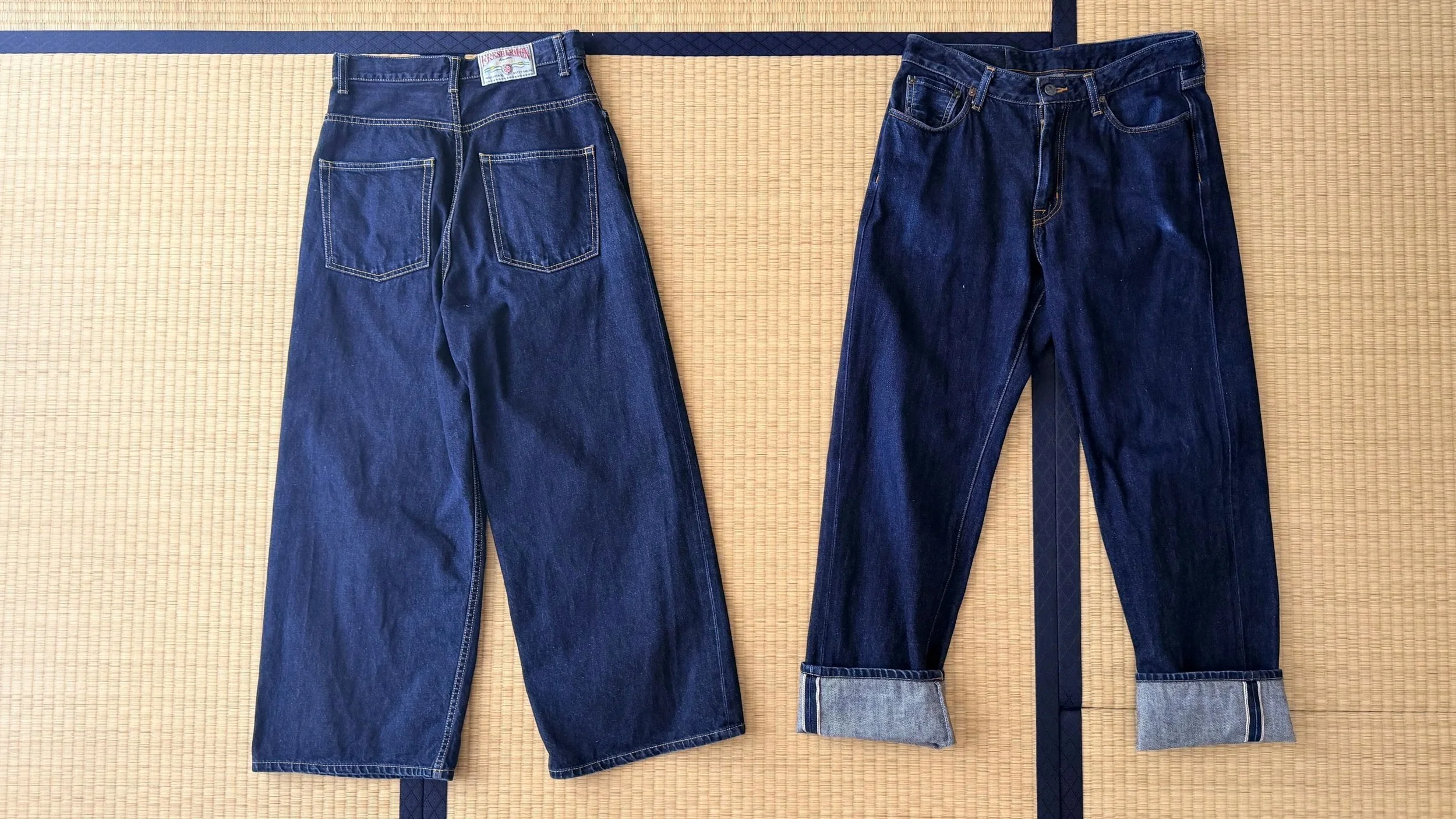
After 2 years of frequent wear: Mel’s regular denim (left) and Jeff’s selvedge denim (right)
Two years ago, while searching all over the internet for unique activities to do in Tokyo, we stumbled upon the Betty Smith Jeans Workshop in Ebisu. At the time, it was still somewhat of a hidden gem… then shortly after we shared our experience on Instagram, our video unexpectedly went viral and reached over 15 million views!
It seemed that many others, like us, were drawn by the idea of customizing a souvenir that was authentic, useful, and high quality. After all, knowing that we’d be able to incorporate our own creativity meant this wasn't going to be just a generic souvenir picked up off a shelf somewhere!
✨ Betty Smith Jeans Workshop: Quick Overview
Inseam: up to 85 cm
** Additional fees apply for some options. Waist sizes 36 inches and above require an additional fee.
Check the Betty Smith booking page for the latest pricing, availability, and workshop details.
✨ What Happened During the Betty Smith Workshop?
Arriving at the Workshop
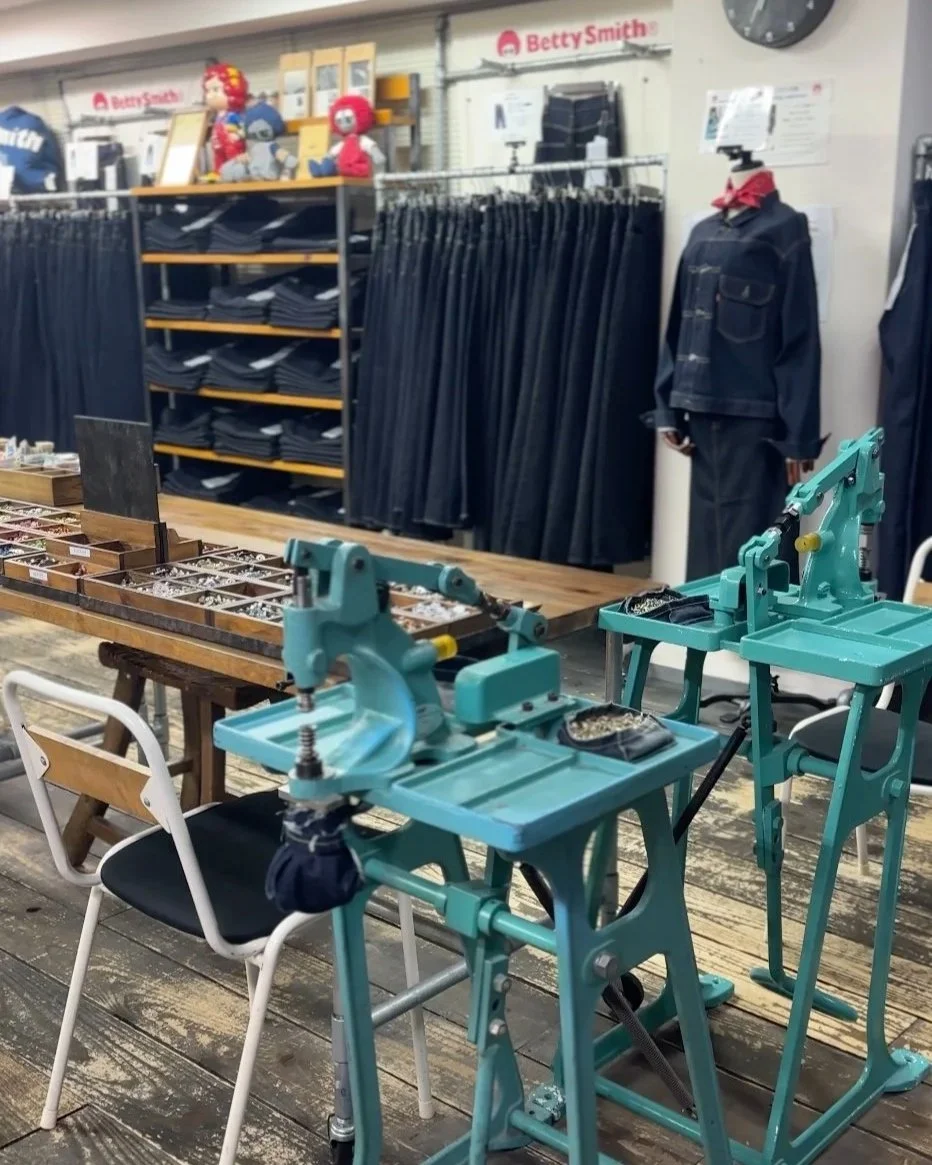
A snapshot inside the Betty Smith Ebisu workshop
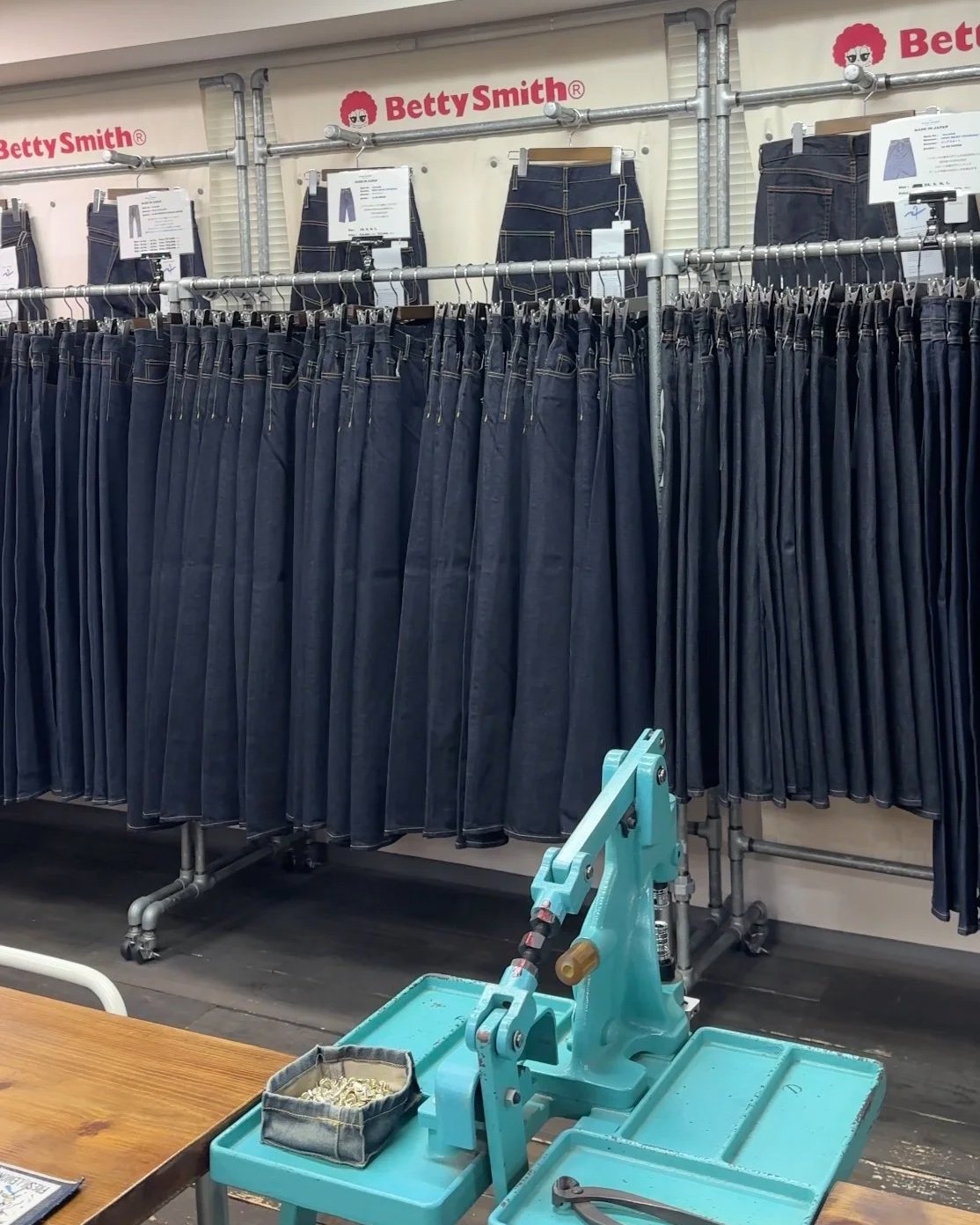
Info cards above each rack tell you about the style, sizing, pricing etc.
The workshop takes up the entire 5th floor of the building, so there is no getting lost as soon as you step out of the elevator. The vintage, wood-floored studio was lined with racks of denim clothing and accessories. With just a quick glance, we spotted everything from denim jeans, skirts, jackets, overalls, bags and accessories.
In the middle of the room, there were long wooden workbenches, with vintage equipment and options for buttons, rivets, patches laid out for customization.
When we arrived, there were just 2 other guests there finishing up from the previous time slot. The staff acknowledged us with a friendly nod, and one came over to properly greet us and confirm our names for the booking.
She gave a quick introduction on what to expect for the workshop flow, which racks to browse for base options (includes selvedge denim) included in the booking fee, and where to browse for upgradable options such as denim jackets or Sanrio co-branded patches and buttons.
We really appreciated was how transparent the pricing was. Prices were clearly marked on the racks, so we could immediately see which pieces required an additional fee and exactly how much extra that would cost. No surprises!
1. Choosing Our Jeans
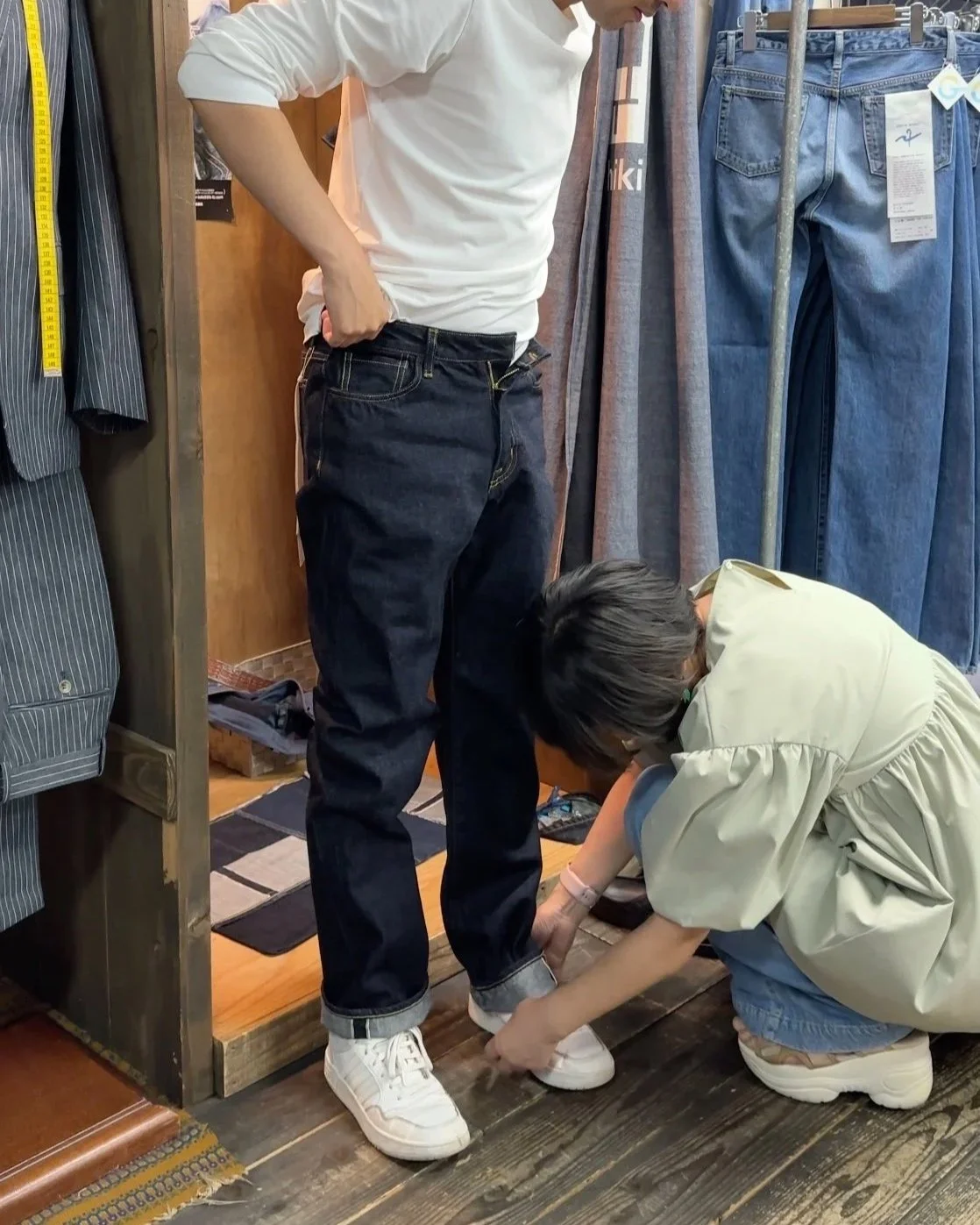
If you’re not sure what length you want to hem, just ask the staff what they suggest!
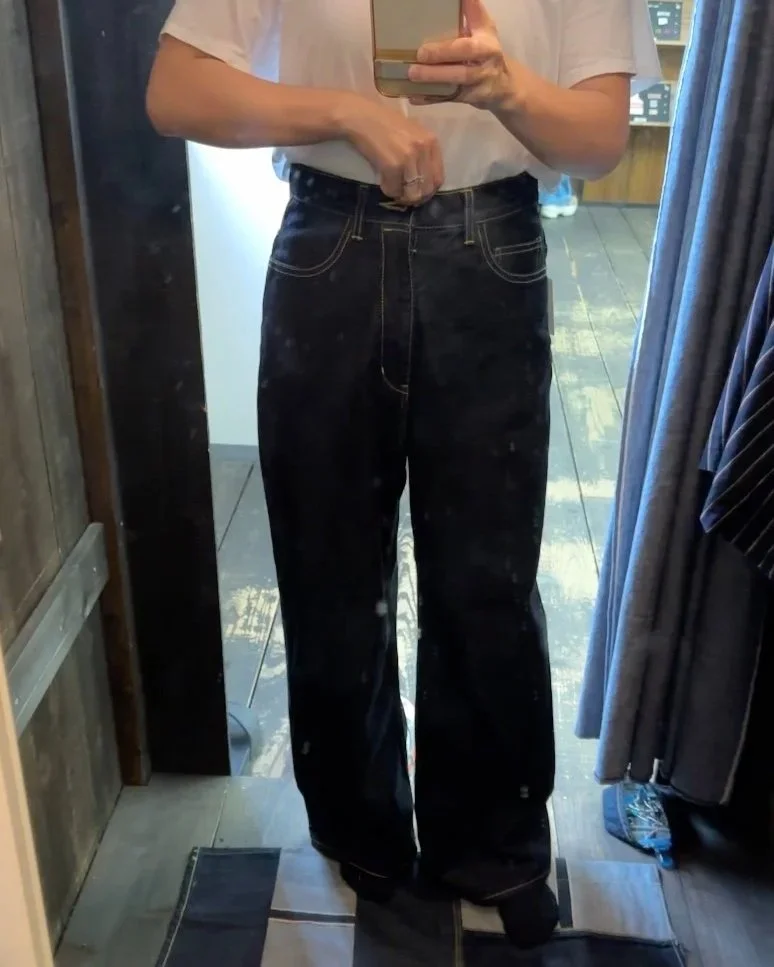
We recommend wearing a simple top that you can tuck in, giving you an accurate sense of how the jeans really look.
We had plenty of freedom to sift through the racks and use the changing rooms to properly try on styles that we were interested in.
Jeff ended up choosing the straight-fit selvedge jeans, which felt like the most classic and versatile option for his wardrobe. Mel went with the high-waisted, wide-leg jeans since they created a flattering silhouette from the waist down.
The staff helped suggest sizes, which saved us a lot of back-and-forth in the changing room. We were able to decide on a style after just a couple of try-ons, leaving us plenty of time to focus on the customization steps to come.
During try-on was when the staff pinned our hems so it could be altered during the final part of the workshop.
2. Choosing Our Customizations
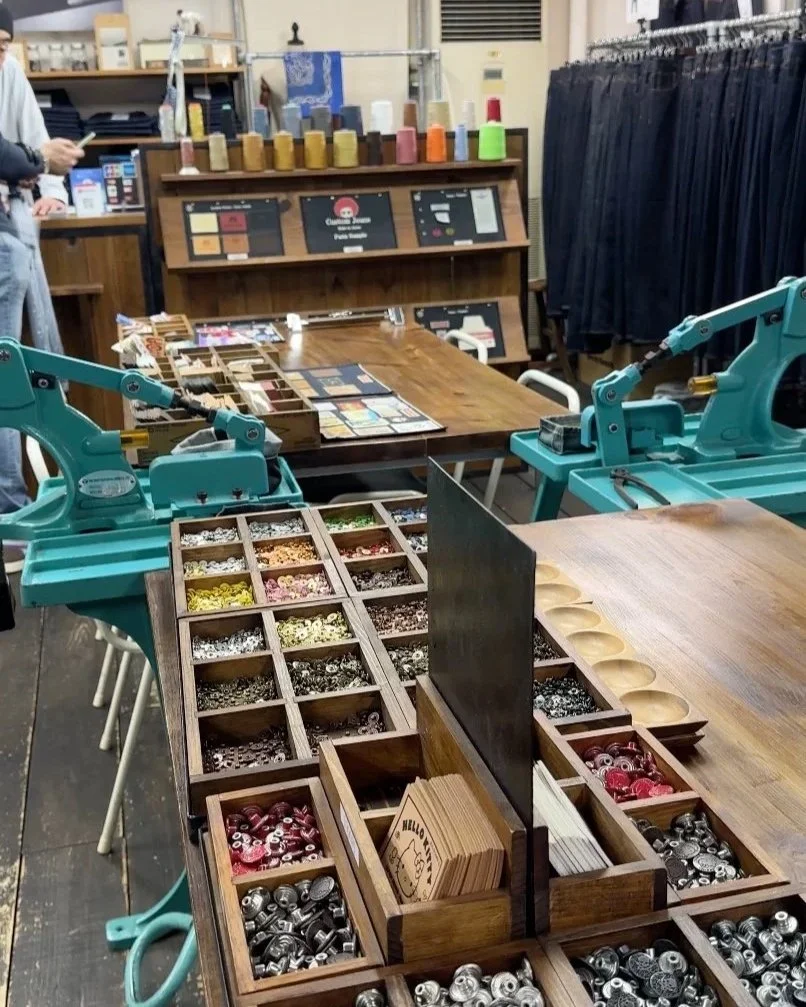
Buttons and rivets, organized by style and colour for you to mix-and-match
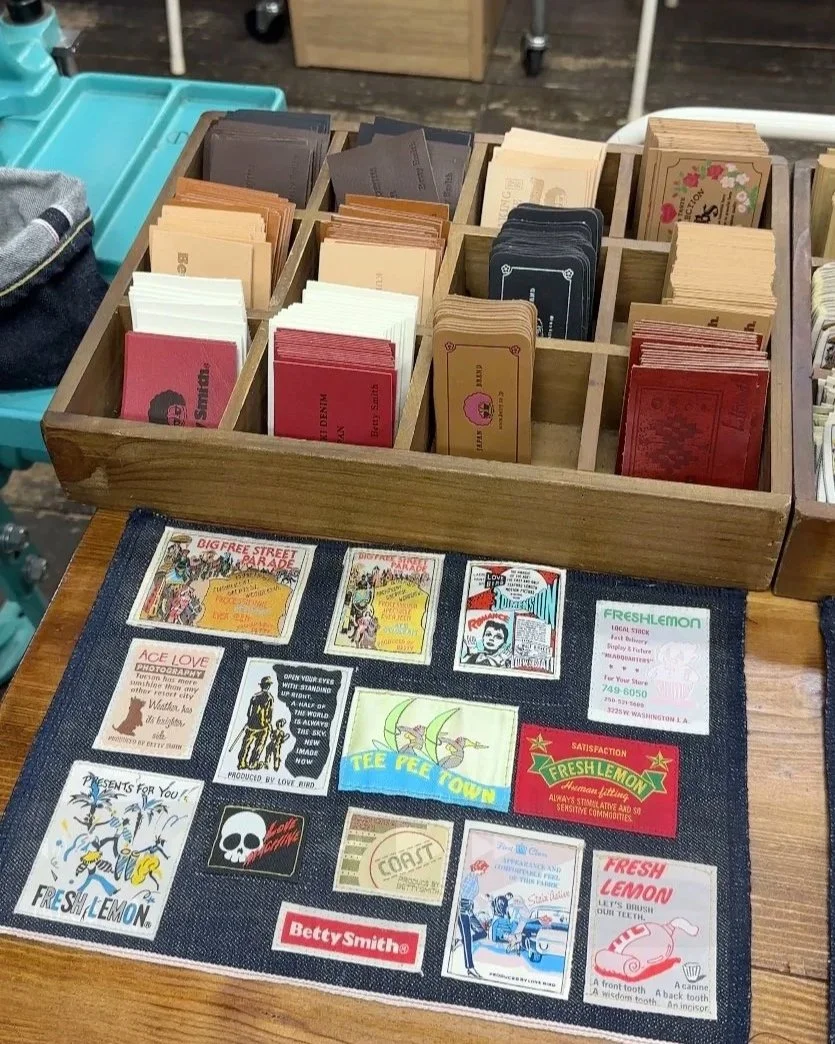
A closer view of some patch options
This was probably our favourite step of the entire workshop. Once we brought our jeans over to the workbench, we were met with wooden trays filled with buttons, rivets, and patches to mix and match.
While browsing, the staff shared some of Betty Smith’s history with us. The company dates back to 1962 and has its roots in Kojima, Okayama - an area world-famous for its denim industry. Over the years, their company produced jeans under various labels, so some of the patches available at this workshop are genuine old stock that had been kept in storage! These were truly retro, and not just new patches designed to look old.
Mel went with a fun “Fresh Lemon” patch, while Jeff chose a more classic leather “Kurashiki Denim Jeans”patch.
For an extra couple hundred yen each, you can add more patches too. Apparently some guests like to put 2 patches side by side. There were options for any style, whether you want to be subtle or to stand out!
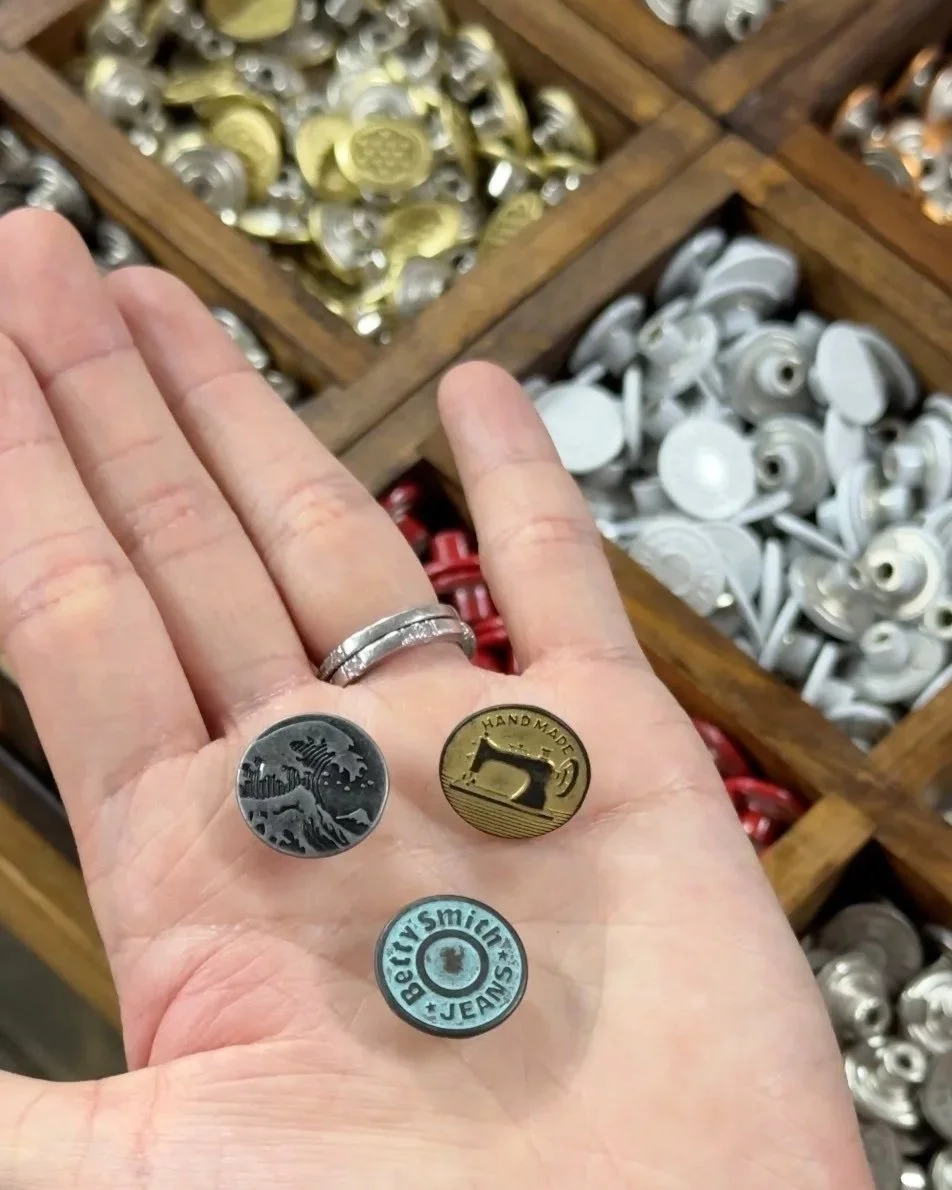
Notice the high quality details on the buttons
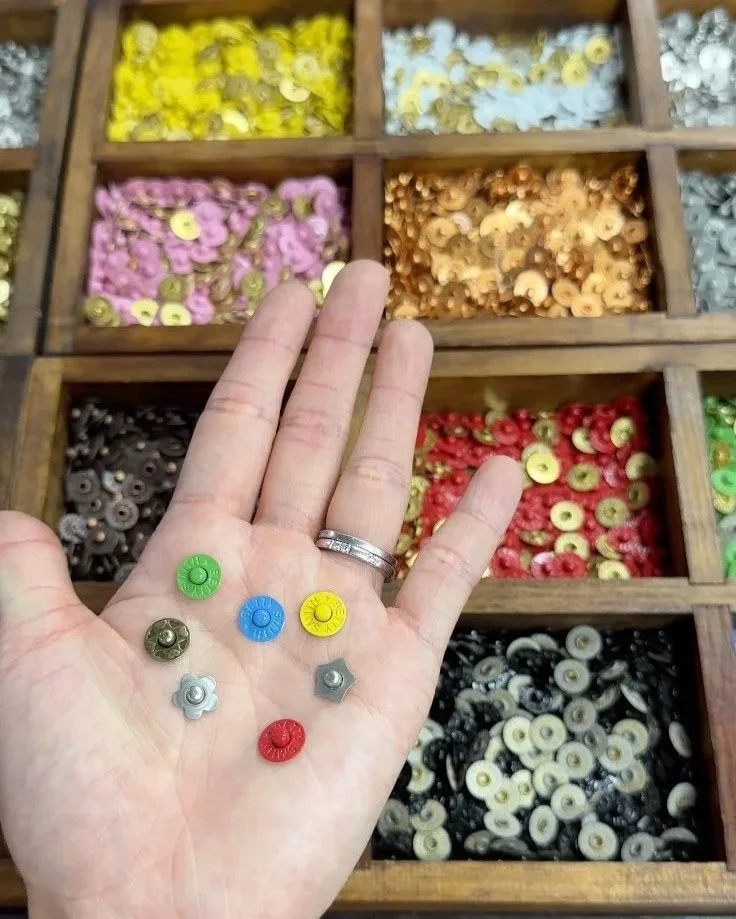
The rivet options are also very fun and colourful
You may at first think that buttons and rivets for jeans are all the same, just little metal bits. But once we actually felt these ones in our hand, we could tell that they are high quality and intentionally selected.
Some had a little more weight to them, others had intricate patterns engraved into the surface, and the colored ones had smooth, even finishes. There were even rivets with scalloped, flower-like edges. These seem like small details, but it all contributes to a pair of jeans that feels more premium than mass produced versions that we often see these days.
For each pair of jeans, you’ll get to select one button and six rivets. There’s really no right or wrong combination. You can keep everything matchy-matchy, or have them all be different!
3. Putting Everything Together
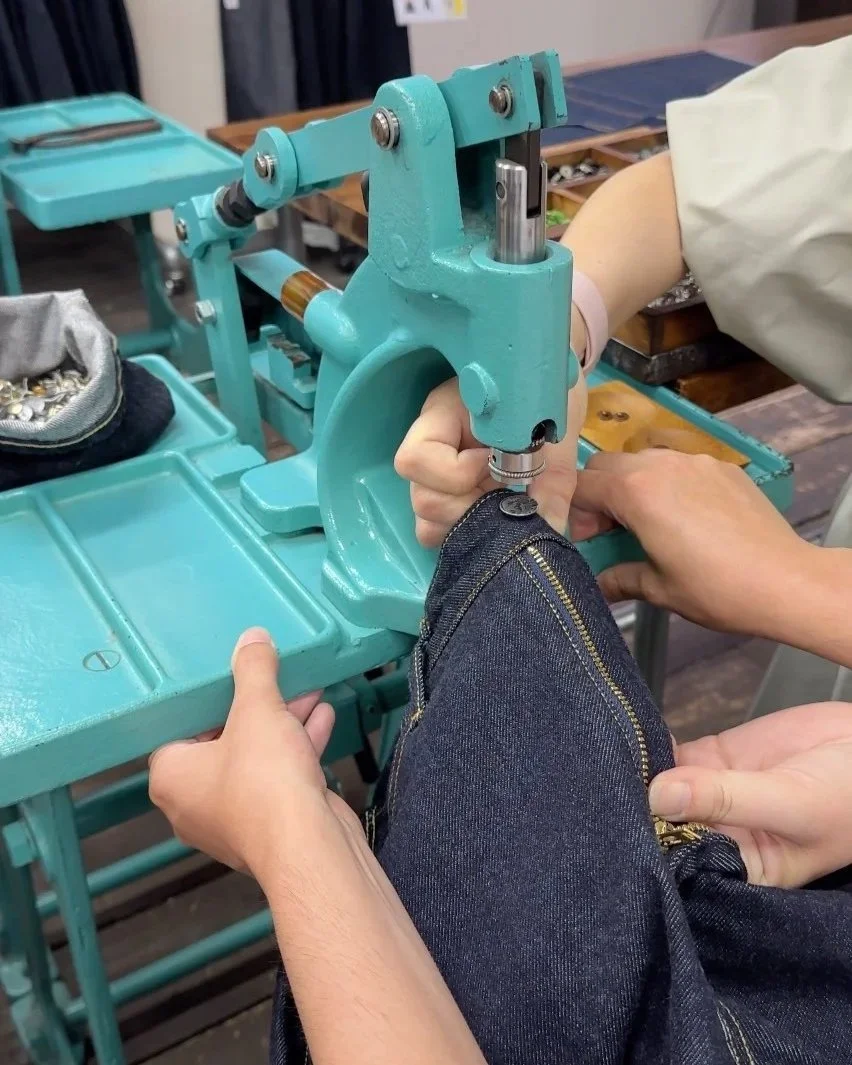
An eye for precision is needed to align the fabric properly
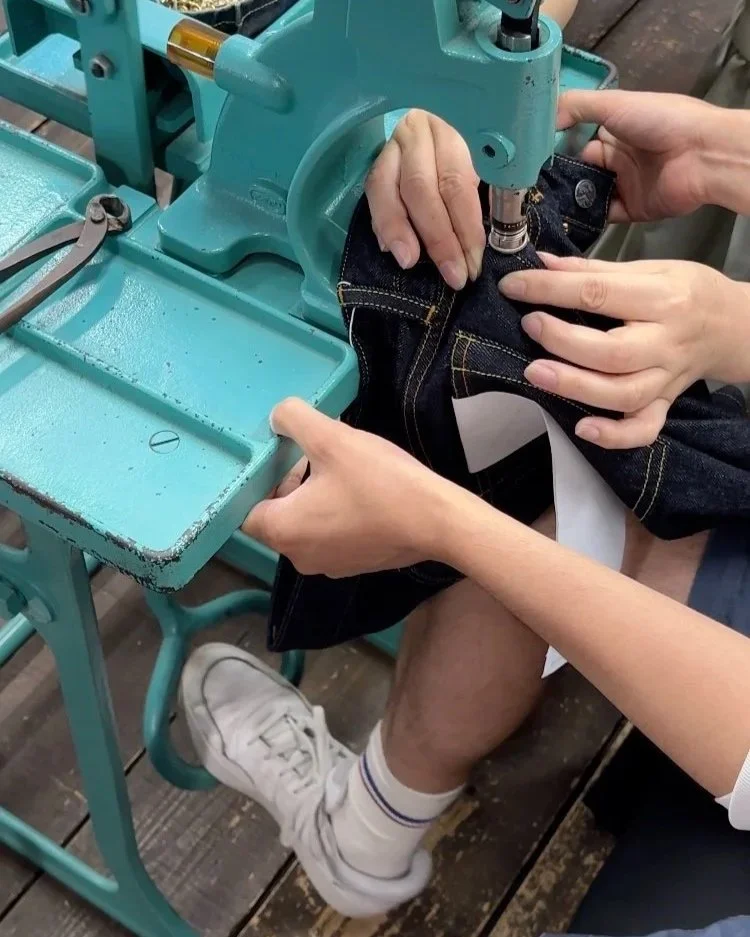
Luckily, the staff were very hands-on, helping us find the right spot each time
One of the most eye catching things about this workshop is the vintage manual press machines! They’ve got a couple sets of these in the studio, positioned at the end of each work bench. So, after choosing our hardware bits, it was just a quick step over to the manual press for the most “physical” part of the whole experience.
Our advice would be to sit up tall, near the front edge of the chair, hold on to the sides of the manual press machine, squeeze your core (flex those abs!), and push forward with one leg on the pedal. It’s fully manual, so it’s all up to your own strength. The first rep is the hardest, but once you get used to the direction and how far the pedal is supposed to move, it gets a lot easier.
The staff were absolutely delightful during this process, verballing hyping us up for every rep - it kind of felt like having a gym buddy next to us. It was honestly surprising because everyone had been so calm and soft-spoken until now. We loved the contrast.
They were by our side the entire time, helping us positioning the fabric before each press, so that everyone button and rivet punched where they were supposed to. So, if you’re a bit of a perfectionist, rest assured: it’s hard to mess this up!
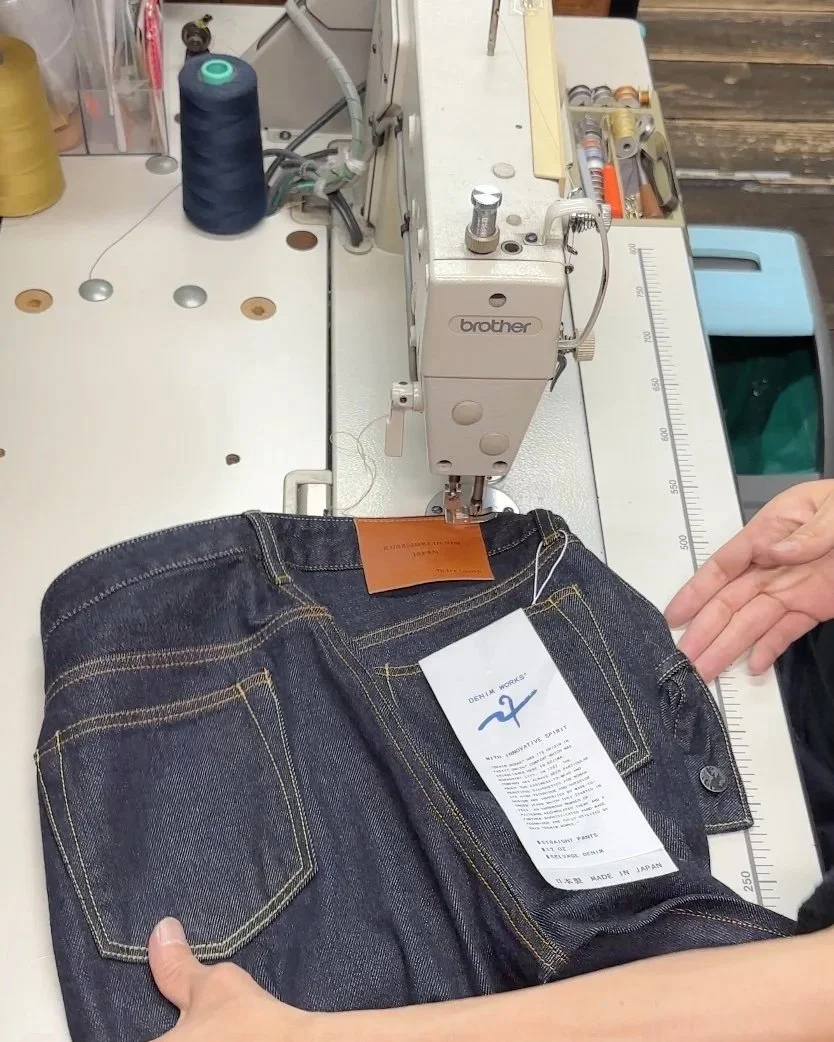
Hemming and sewing on the patch was done by the staff
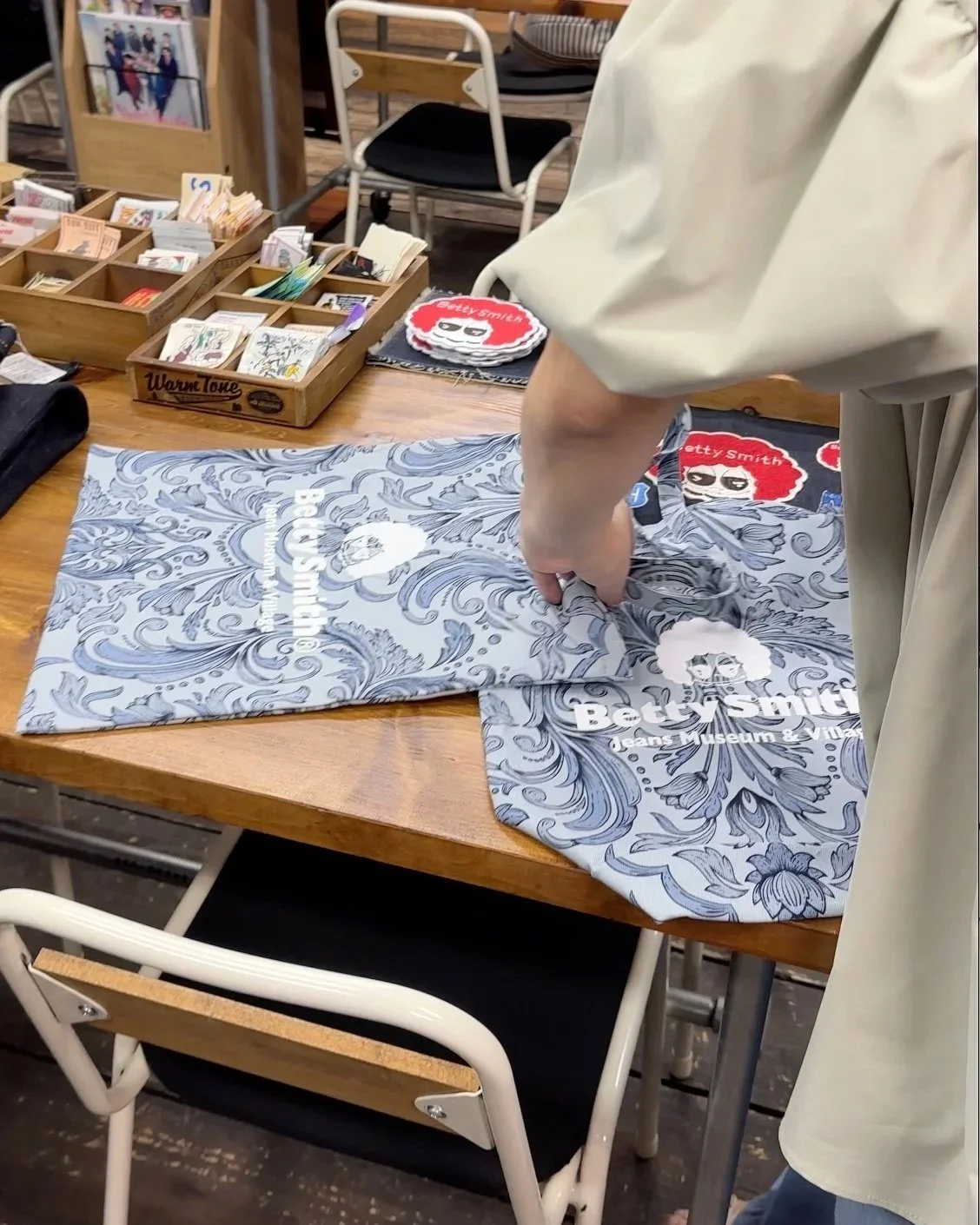
Our completed jeans were placed into lovely tote bags
After finishing with the press, the staff took our jeans behind the counter for hemming and to sew on the patches we selected. Oh, and you can choose which side of the waistband you’d like the patch to go. It was an efficient process that only took about 10-15 minutes.
Then came the final reveal! The staff showed us our completed jeans, folded them up, and slipped them inside custom Betty Smith fabric tote bags. These bags were a nice souvenir on their own, and different styles are offered on rotation, so you can look forward to what design they have during your visit! We have washed and reused these bags many times - they arepretty handy for day-to-day use.
✨ Regular vs. Selvedge Denim: What We Chose
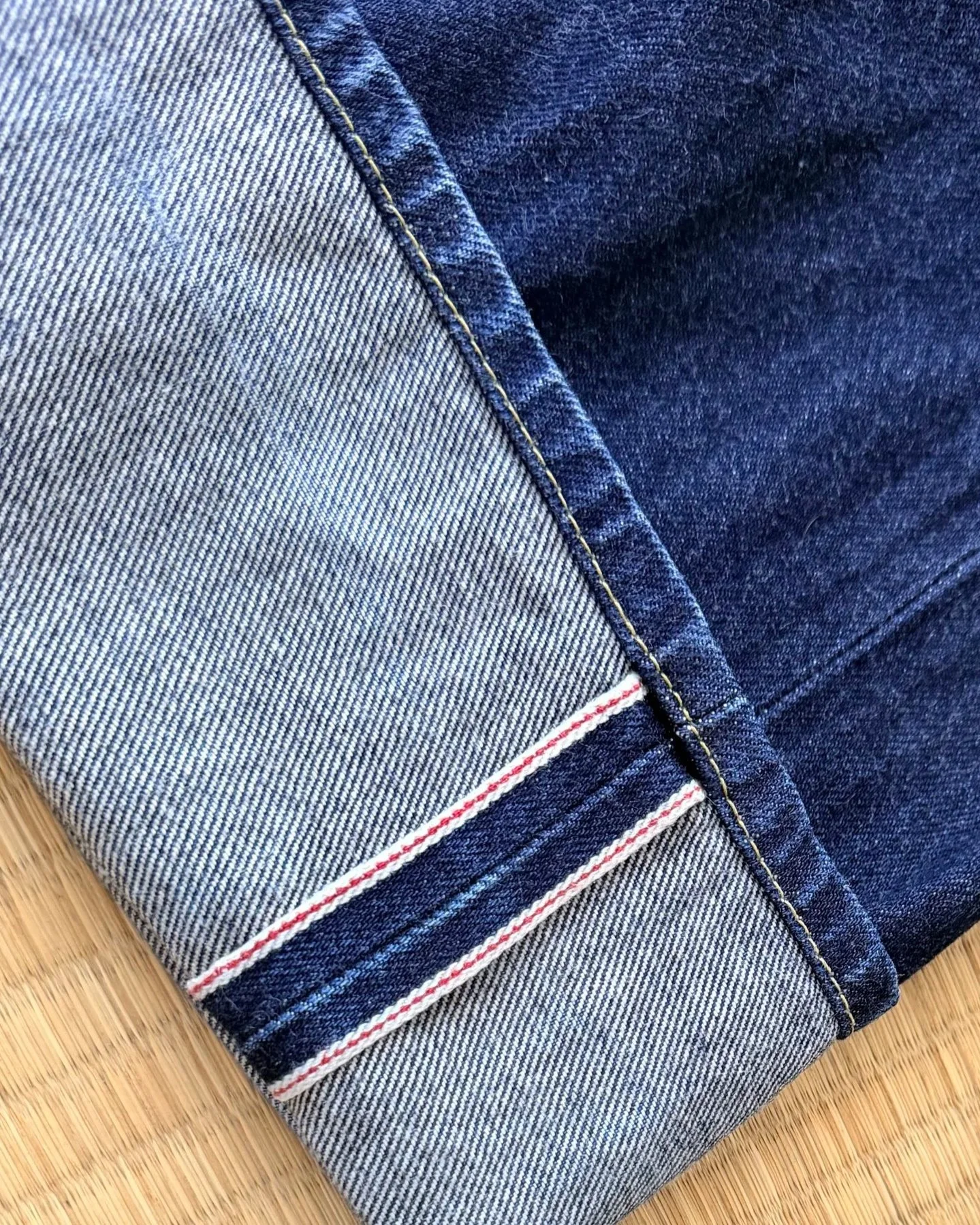
The “self-edge” is literally how selvedge jeans got its name
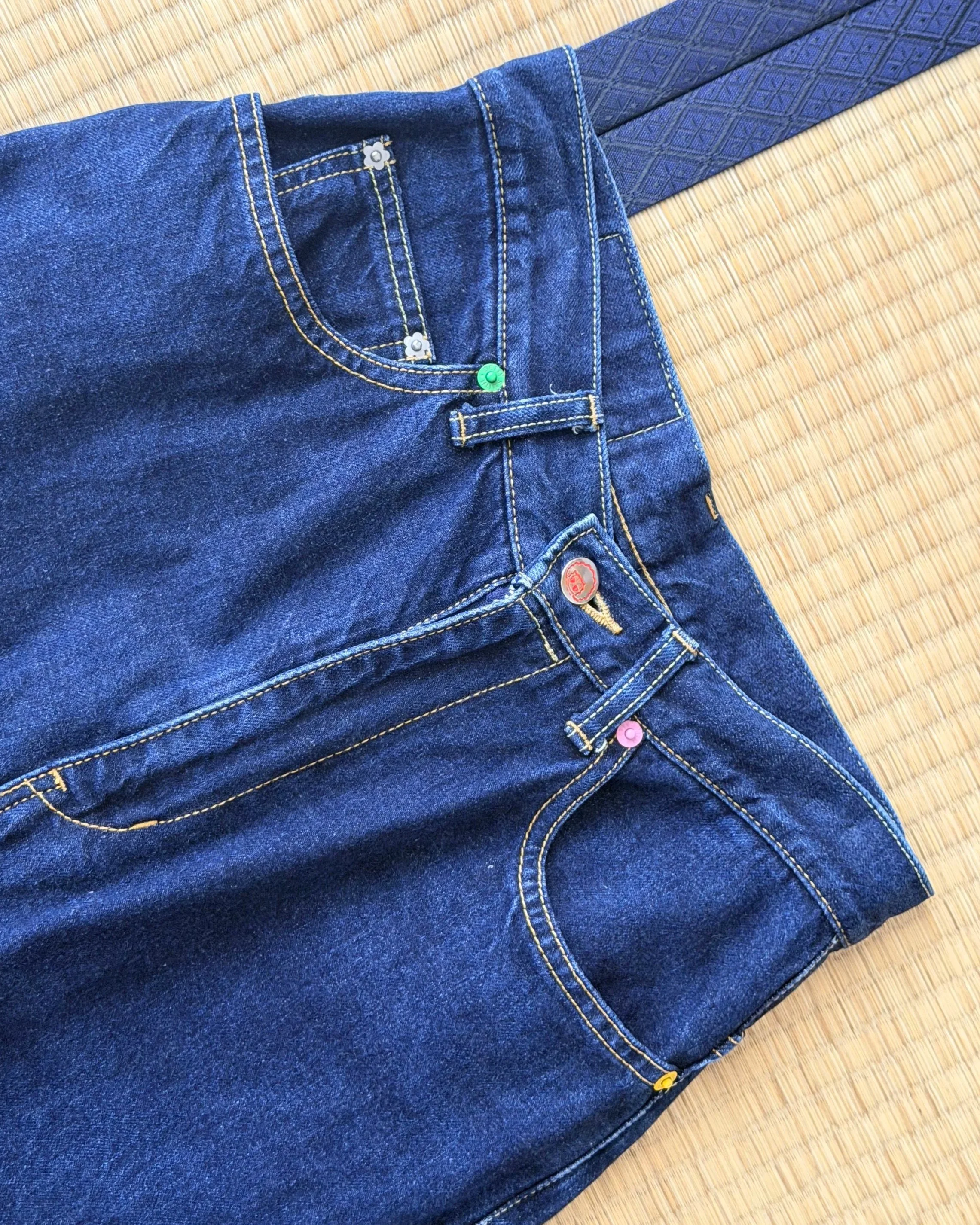
No chipping or loss of color on the hardware
We actually both wanted to choose selvedge denim, but the silhouette Mel wanted was only available in regular denim during our visit. So we ended up with one of each type: Jeff chose straight-fit selvedge jeans, while Mel chose high-waisted, wide-leg regular jeans.
Both are high-quality denim manufactured by Betty Smith in Okayama, but there is something extra special about the traditional construction of selvedge denim. Selvedge denim is woven on vintage shuttle looms and finished with a “self-edge” which keeps it from fraying. You’ll often see a red edge when you flip the pant leg over - it’s a recognizable characteristic of selvedge denim (some brands might use a different color). If you want to show off this detail, consider leaving your jeans a bit longer when getting them hemmed so you have enough length to cuff them!
That said, we wouldn't choose selvedge just because it's selvedge. At least for us, having the right fit matters more, which is why Mel ultimately went with the regular denim.
And after wearing both pairs for more than two years, we've been able to see how each type has aged differently, which we'll get into next.
✨ Our Betty Smith Jeans After 2 Years
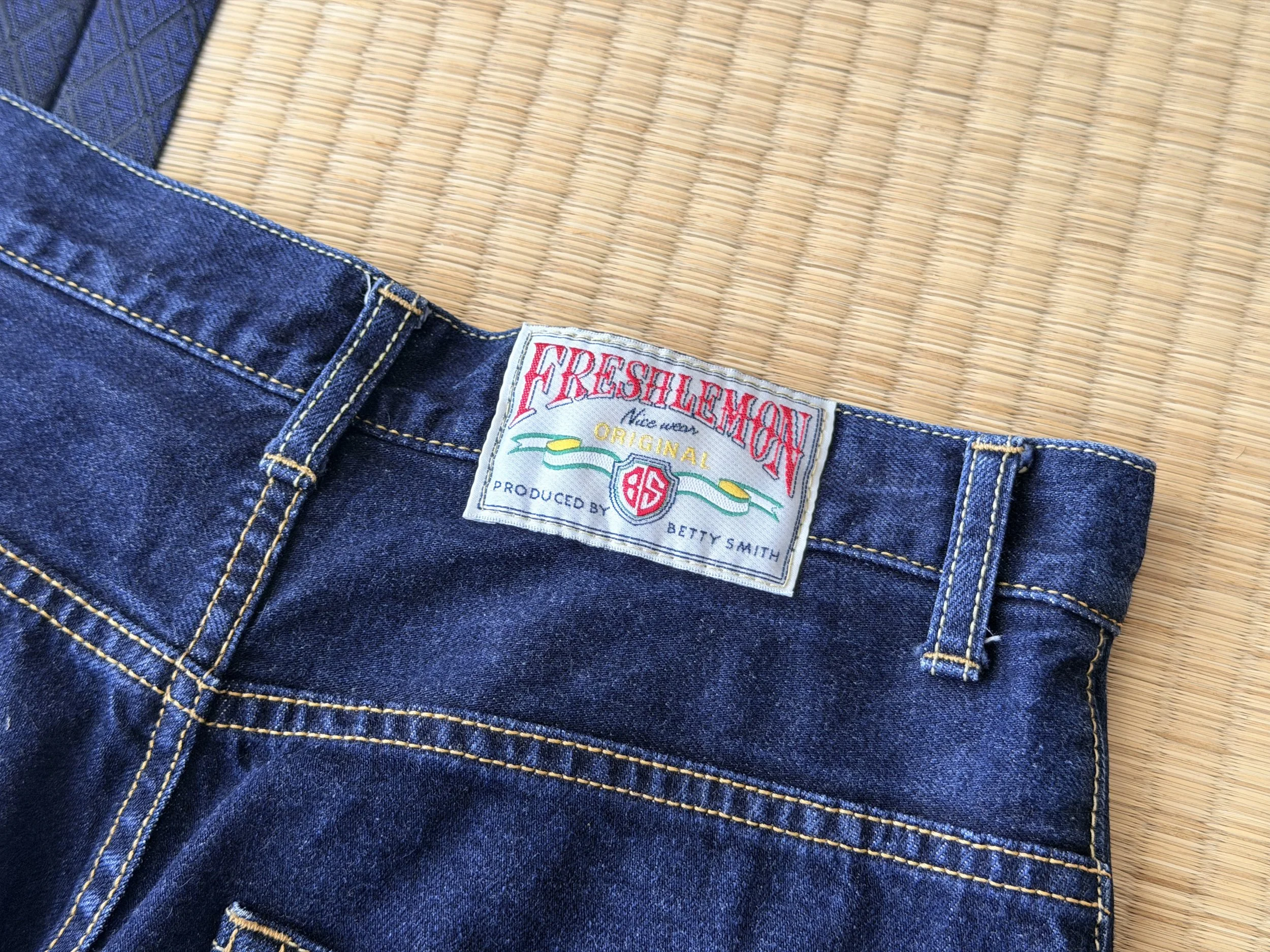
We couldn’t capture photos that fully reflect how the aging looks in real life…
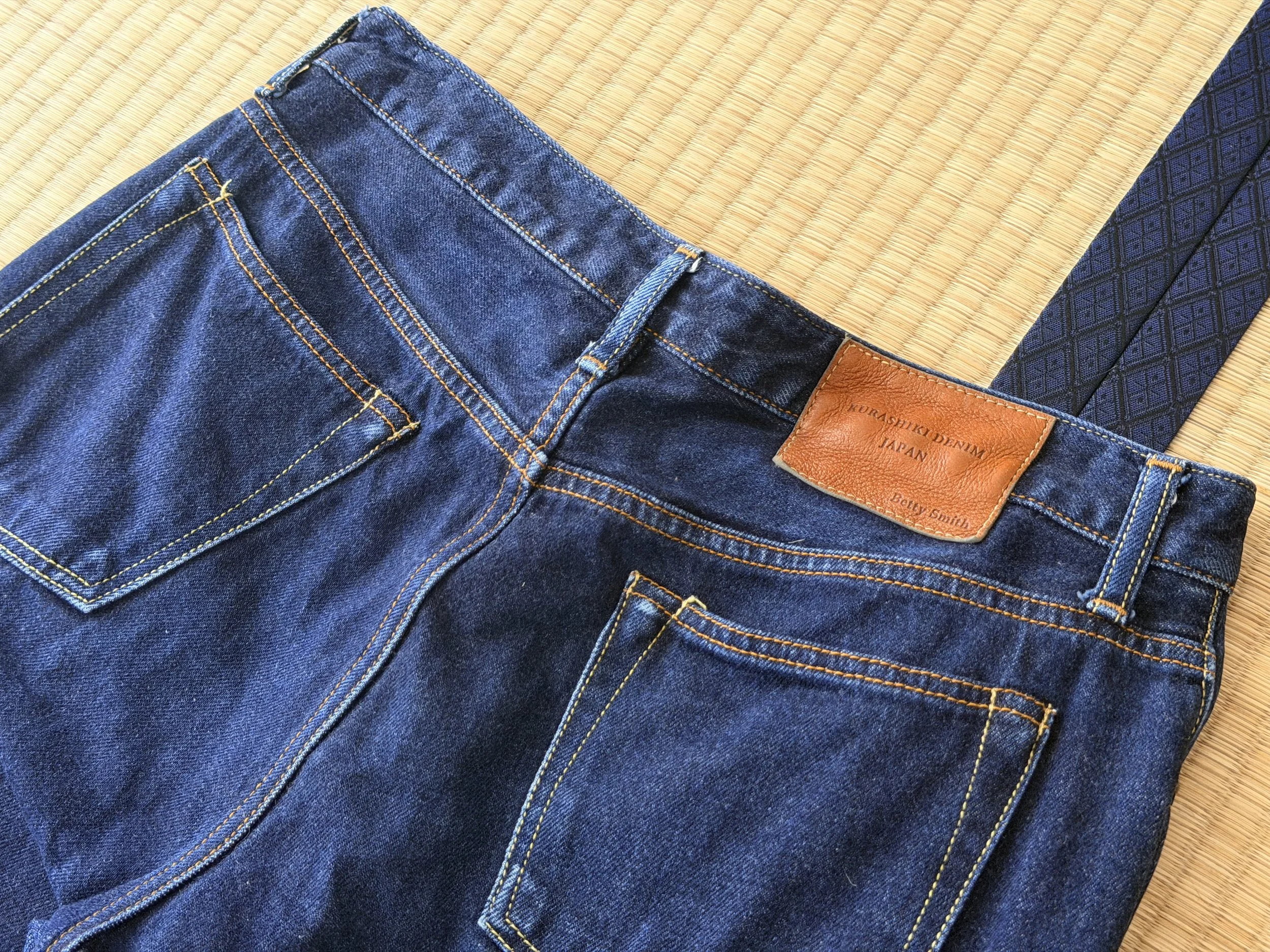
… but hopefully you can see that the selvedge denim (right) has faded really nicely and looks less sharp compared to the regular denim (left)
In a nutshell, both pairs are still in great condition. Aside from during Tokyo's brutally hot summers, we've worn these on average around 2–3 times per week, so they've definitely gotten plenty of use!
So far, we've had no issues with the fabric, seams, metal hardware, or patches. Everything has held up impressively well.
Interestingly, our two pairs haven't aged in quite the same way.
Mel's regular denim jeans still look and feel close to the way they did when they were new. The color has probably faded just a tad, but very uniformly so, and therefore not super noticeable.
Jeff's selvedge pair, on the other hand, has changed more over time. The denim has developed a charming patina and softened nicely with wear, giving a lived-in character that can only be achieved by wearing a good pair of jeans over and over again.
Fit & Shrinkage
Size-wise, we'd choose the same again (true to size).
We only wash these in cold water and line-dry them, and neither pair has shrunk noticeably enough for us to wish we'd sized up.
In terms of the hemming, however, there’s just one thing Mel would do differently next time:
““When I was getting the hem pinned, there wasn't a button attached yet, so I instinctively held the waistband up with my hand. This made the jeans sit slightly higher than they normally would, and I ended up having them hemmed a little shorter than I would've liked. In hindsight, I should've just zipped the fly and let the jeans sit naturally on my hips.”
✨ Is the Betty Smith Jeans Workshop Worth It?
Overall, yes! We think the Betty Smith jeans workshop is worth it, especially if you're looking for an authentic made-in-Japan souvenir that you can use long after your trip.
We were satisfied with the service, the quality of the finished jeans, and the experience flow. The price felt reasonable to us considering you're getting a pair of jeans from a long-established Japanese manufacturer, while also getting the experience of choosing the fit and customizing the hardware and patch yourself.
If we could wish for one thing differently, it would be to have more variety in the denim itself. At the time of our visit, the workshop focused on classic indigo denim, but we would have loved to see some lighter washes available too. We absolutely appreciate indigo dye and its long history in Japanese craftsmanship… but aesthetically, sometimes you just want a lighter pair of jeans!
Overall, if you're looking for an experience that balances cost, quality, and customization without going to the extreme, we think the Betty Smith jeans workshop offers excellent value.
👖 We'd recommend Betty Smith if you...
✓ Want a special, wearable souvenir from Japan that you'll keep using after your trip
✓ Enjoy hands-on experiences where you get to participate in making something
✓ Love Japanese denim, craftsmanship, or vintage-inspired details
✓ Want to personalize a pair of jeans while still having expert guidance throughout the process
✓ Like the idea of a relaxed, intimate workshop with plenty of time to browse and make your choices
👖 It might not be for you if you...
– Want fully made-to-measure jeans, rather than customizing an existing design
– Have your heart set on a specific fit or color that may not be available
– Aren't particularly interested in the workshop experience itself and would rather simply shop for finished jeans
Use our Klook discount code JEFFANDMELKLOOK to save 5% if you're a new user or 3% if you're a returning user.
This article contains affiliate links, which means we may earn a commission if you make a booking through our links, at no additional cost to you.